
Otosclerosis
Diagnosis and surgical treatment for otosclerosis-related hearing loss.
Overview
Understanding Otosclerosis
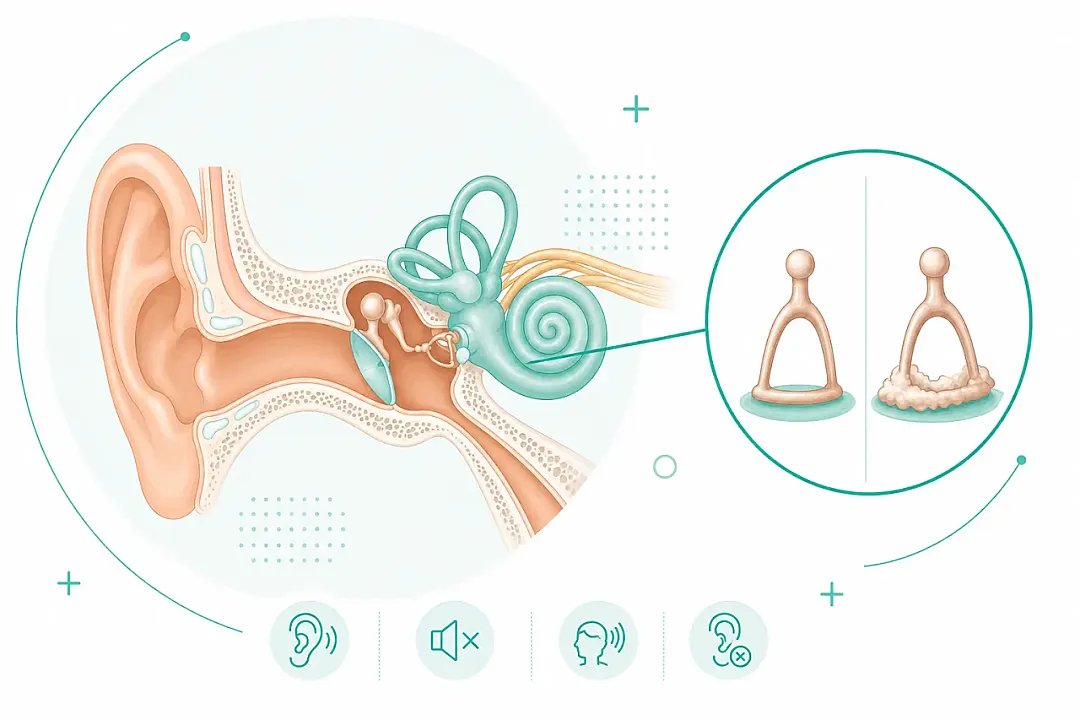
Otosclerosis is a condition in which abnormal bone growth occurs around the stapes, one of the tiny bones in the middle ear responsible for transmitting sound to the inner ear. This abnormal bone growth fixes the stapes in place, preventing it from vibrating normally and leading to gradual, progressive hearing loss. Otosclerosis usually develops slowly over several years and commonly affects both ears, though one ear may be affected more than the other.
At Dr Hans' Centre for ENT, we provide comprehensive evaluation and personalized treatment for otosclerosis. Our ENT specialists use advanced hearing tests and imaging to confirm the diagnosis and recommend the most appropriate treatment, whether medical management, hearing aids, or stapes surgery, to help restore and preserve your hearing.
- Gradual hearing loss, often starting in one ear
- Difficulty hearing low-pitched sounds or whispers
- Better hearing in noisy environments than in quiet ones
- Ringing or buzzing in the ears (tinnitus)
- Dizziness or balance problems in some cases
- Hearing loss that slowly worsens over months to years
- Family history of similar hearing loss
- Abnormal bone remodelling around the stapes footplate
- Family history of otosclerosis (genetic predisposition)
- Being female — the condition is more common in women
- Pregnancy, which may accelerate progression in some cases
- Age between 20 and 40 years, when it commonly begins
- Certain viral infections, such as measles, suspected in some cases
- Caucasian ethnicity, which carries a higher prevalence
- Detailed medical and family history
- Ear examination using an otoscope or microscope
- Pure Tone Audiometry to assess the type and degree of hearing loss
- Tympanometry to evaluate middle ear function
- Speech audiometry
- CT scan or CBCT of the temporal bone in selected cases
- Regular monitoring for mild, early-stage otosclerosis
- Hearing aids to amplify sound for suitable patients
- Stapedotomy or stapedectomy surgery to restore sound transmission
- Use of advanced prosthetic devices during surgery
- Bone conduction hearing devices for selected patients
- Cochlear implant evaluation in advanced cases with severe hearing loss
- Regular hearing follow-up after treatment
Since otosclerosis is largely linked to genetic and hereditary factors, it cannot always be prevented. However, early diagnosis and timely treatment can help slow the impact of hearing loss on your daily life. Regular hearing check-ups are especially important if you have a family history of the condition.
At Dr Hans' Centre for ENT, we provide comprehensive evaluation and advanced surgical treatment for otosclerosis. Our experienced ENT specialists use detailed audiological testing and imaging to confirm the diagnosis before recommending the most appropriate treatment. From hearing aids to microsurgical stapes surgery performed with precision instruments, we focus on restoring hearing and improving quality of life through personalized, evidence-based care.
When to See a Doctor
- Gradually worsening hearing loss
- Hearing loss that runs in the family
- Difficulty hearing on the phone or in conversations
- Ringing in the ears
- Hearing loss during or after pregnancy
Common Questions
Frequently Asked Questions
Otosclerosis is a condition in which abnormal bone growth around the stapes bone in the middle ear restricts its movement, leading to progressive hearing loss.
Yes. Otosclerosis often runs in families, and having a close relative with the condition increases your risk of developing it.
Yes. Otosclerosis commonly affects both ears, although hearing loss may be more advanced in one ear than the other.
In some women, hormonal changes during pregnancy may accelerate the progression of hearing loss associated with otosclerosis.
No. Many patients manage well with hearing aids. Surgery is recommended for suitable candidates seeking a more permanent improvement in hearing.
Stapedotomy is a microsurgical procedure in which a small prosthesis is used to replace the fixed stapes bone, restoring sound transmission to the inner ear.
Stapes surgery has a high success rate in improving hearing for appropriately selected patients, though outcomes vary based on individual factors.
If you notice gradually worsening hearing loss, especially with a family history of the condition, you should schedule a hearing evaluation with an ENT specialist.
We're Here to Help You Hear Better
Our experts are ready to help you with accurate diagnosis and the right treatment.